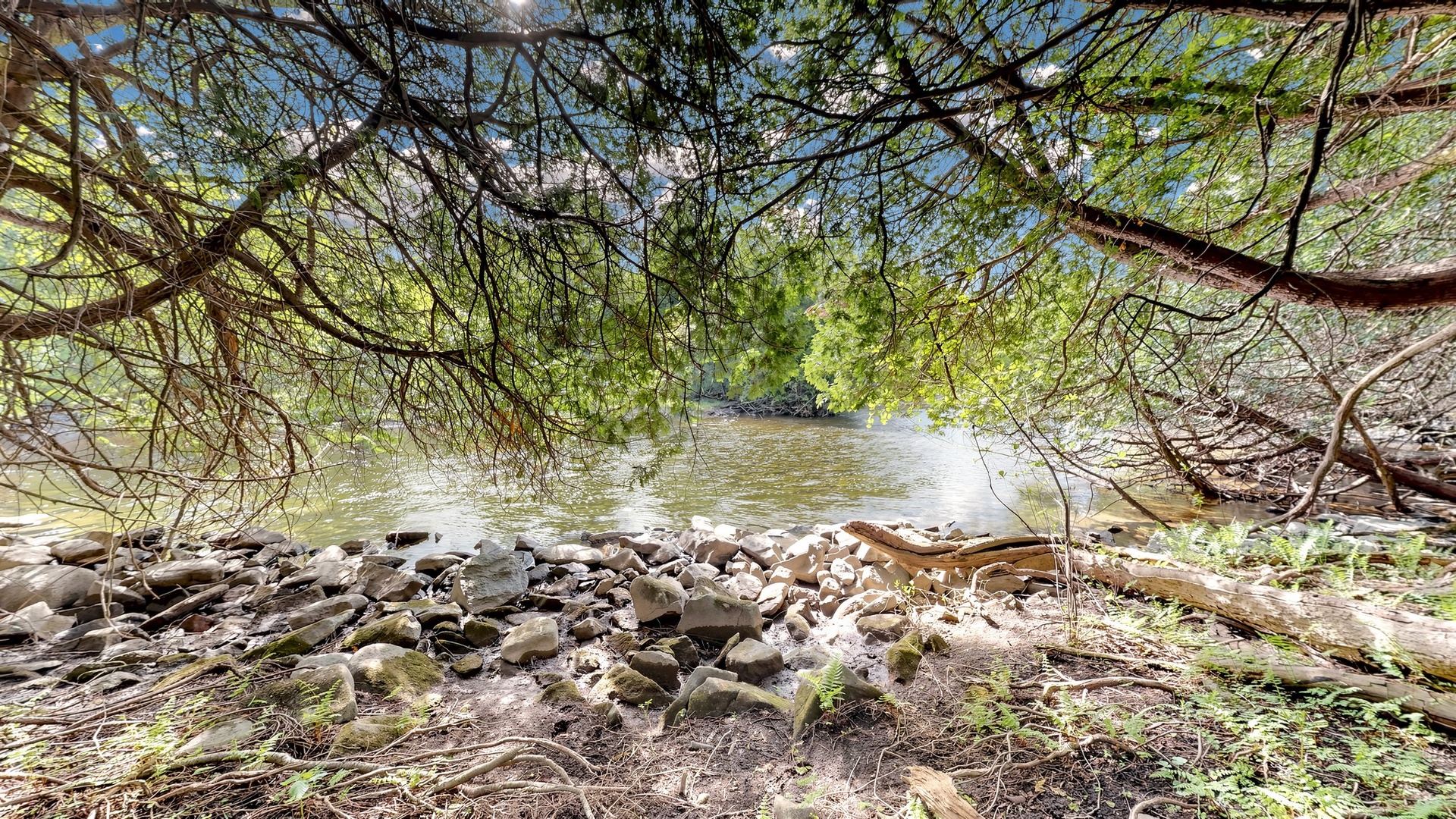
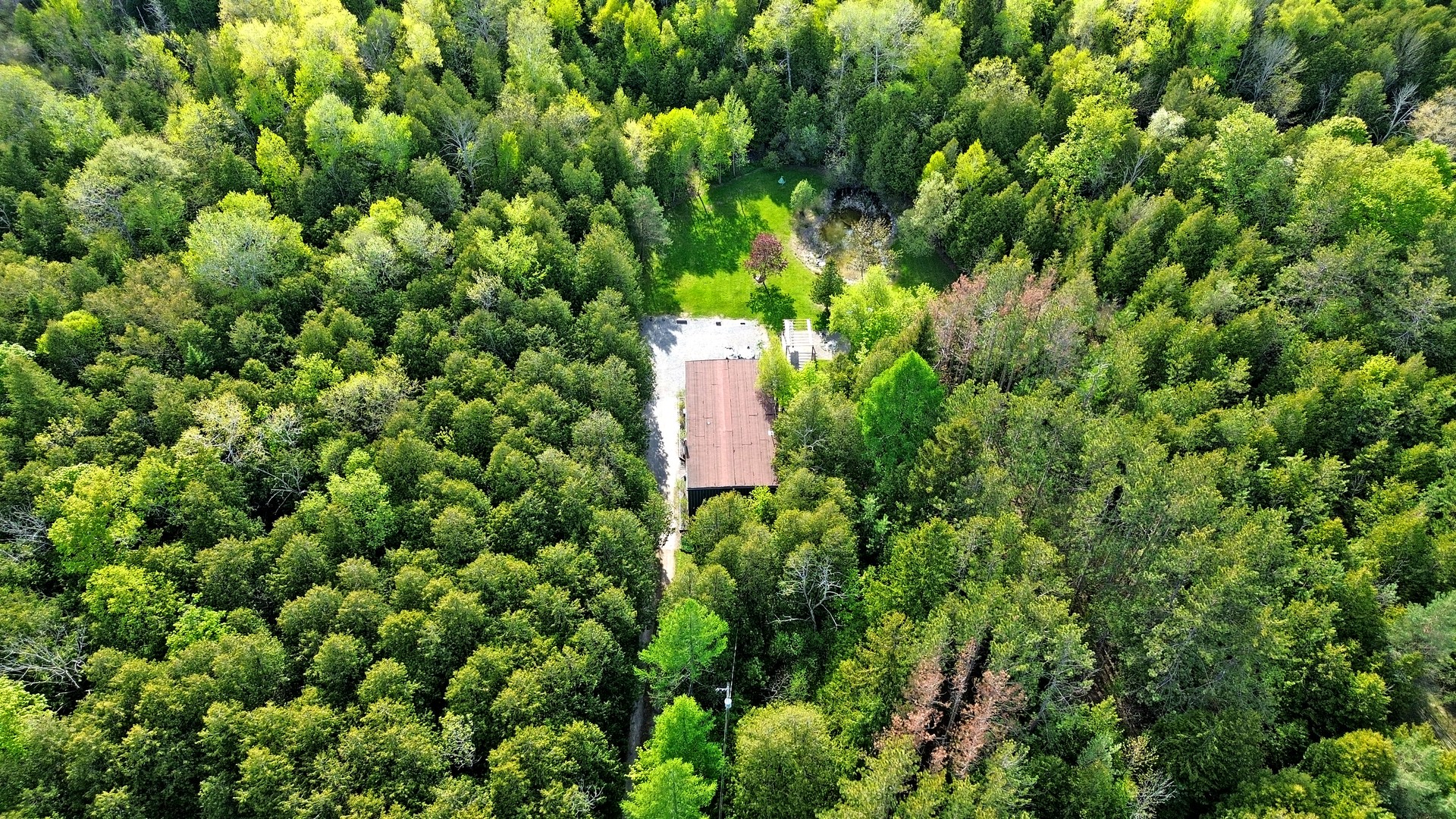
Tucked in a valley where the Eramosa River splits into two branches, Eden Mills has been quietly beautiful for the better part of two centuries. The village still looks much as it did a hundred years ago: Scottish limestone buildings, dense cedar bush, the old mill above the water, and its story is the story of the river that runs through it.
Before the village: the river and its first people
Long before any mill turned, the cedar-shaded valley of the Eramosa was a hunting and fishing ground. In the 1600s the dense bush here was favoured country of the Attawandaron (the Neutral Nation) and later lay within the territory of the Mississaugas of the Credit, who negotiated the sale of a large tract of land that included this area in 1818.
1842: Kribs Mills on the Eramosa
The settlement was founded in 1842, when the Kribs brothers, Daniel and Aaron, built a mill on the Eramosa River. The hamlet that grew up around it was first known as Kribs Mills. Water did the work: the Eramosa, a branch of the Speed, was dammed to power first a sawmill and then a grist mill, and lumber was as much the business as flour in those earliest years.
- In 1846 the Kribs brothers sold the business to a new owner, Adam Argo.
- Argo renamed the settlement Eden Mills, describing the location as "beautiful as the Garden of Eden."
- The name of the village's key business became the name of the whole place, and it has been Eden Mills ever since.
A bustling milling village
Through the second half of the 1800s, Eden Mills became a small commercial centre for southern Eramosa Township. At its height the village boasted a grist mill, an award-winning oatmeal mill and several saw mills, all turning on the power of the river. Around them grew a three-storey general store, a hotel, a post office, a blacksmith, even a taxidermist, and a community hall raised around 1893. By 1902 the population stood at about 300.
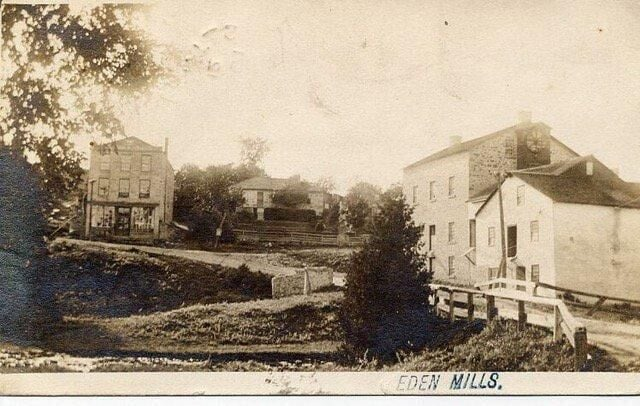
Milling was never an easy living. The stone mill, built in stages from the mid-1850s by the Hortop family, adopted the new steel roller process around 1880 to keep up with changing tastes, financed by an expensive mortgage. As large firms came to dominate flour milling in the 1890s, small operations like Eden Mills survived by custom-grinding grain for cattle feed. The Hortops sold to James Barden in 1917; by the 1930s the mill had turned to woodworking, and milling finally wound down around 1950. A flood in 1947 damaged the dam that had powered it all.
The railway and the rise of Edgewood Park
In 1917 the Toronto Suburban Railway was extended to Guelph, with a stop at Eden Mills. The line let local farmers ship produce to Toronto and, just as importantly, it brought city visitors out to the countryside. Around 1924, Edgewood Park was built near the railway station to draw them: a baseball diamond, a picnic ground, cottages and a dance pavilion on the riverbank. For a brief, lively era, Eden Mills was a recreational destination at the end of a train line.
The street name Edgewood is a direct echo of that era. Edgewood Park, the riverside resort that once welcomed trainloads of visitors to Eden Mills.
The good times on the rails were short. The railway ceased operations in 1930, and Eden Mills settled into a quieter life, becoming a police village, a small form of local government once common in Ontario.
A village reinvented
What's remarkable about Eden Mills is how gracefully it has aged. With a population of around 350, it has reinvented itself as a community known for its literary, artistic and environmental life, most famously through the Eden Mills Writers' Festival, founded in 1989, which gathers readers and authors on the banks of the Eramosa each fall. Historic buildings have been lovingly repurposed: the former church, the village hall, the camp by the river, the old mill itself.
Today the charming hamlet looks much as it did a century ago: Scottish limestone, cedar forest and the two branches of the Eramosa threading through it on their way to join the Speed at Guelph, and then the Grand, a Canadian Heritage River. It remains, as Adam Argo saw in 1846, a small garden of Eden.
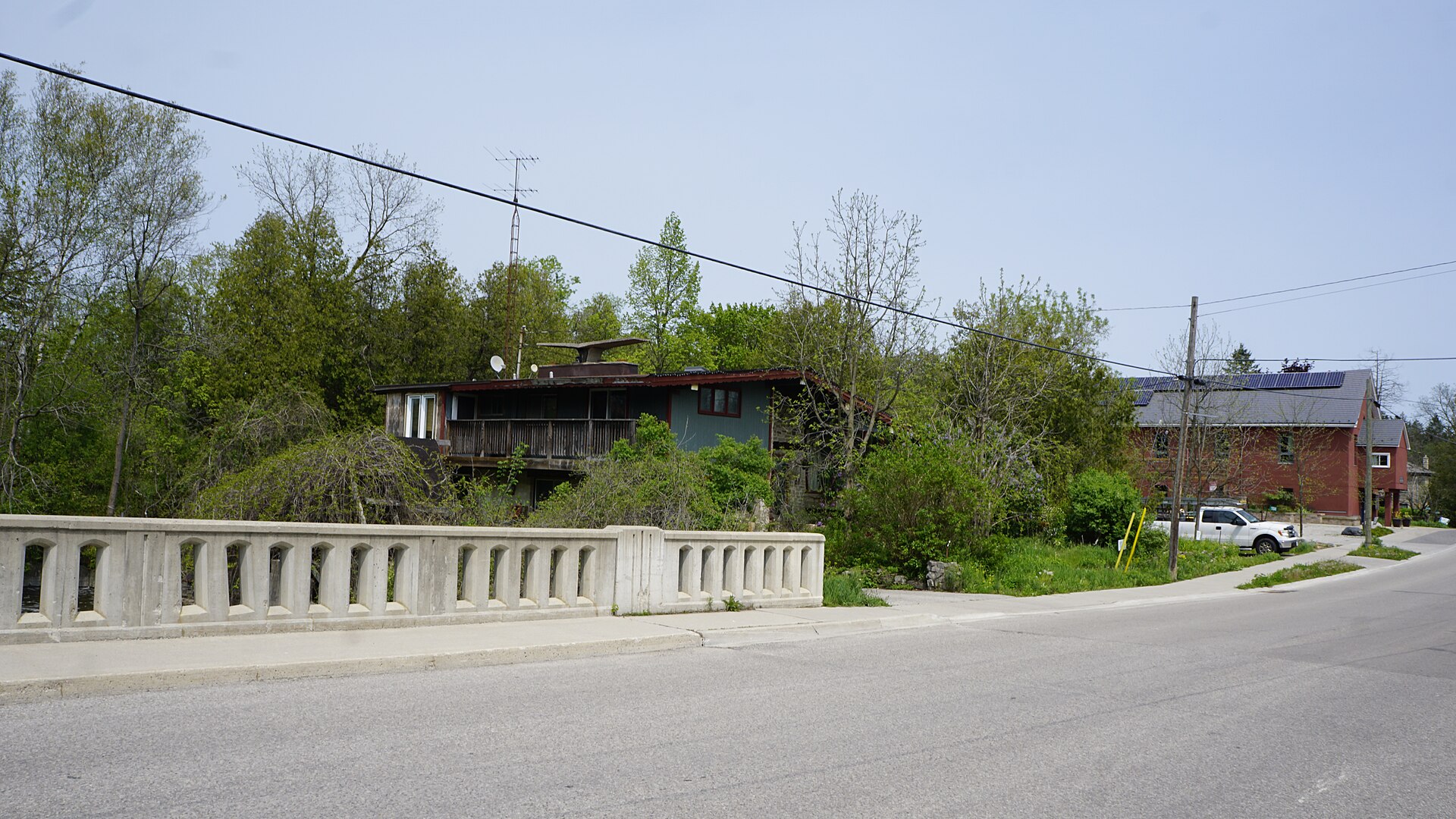
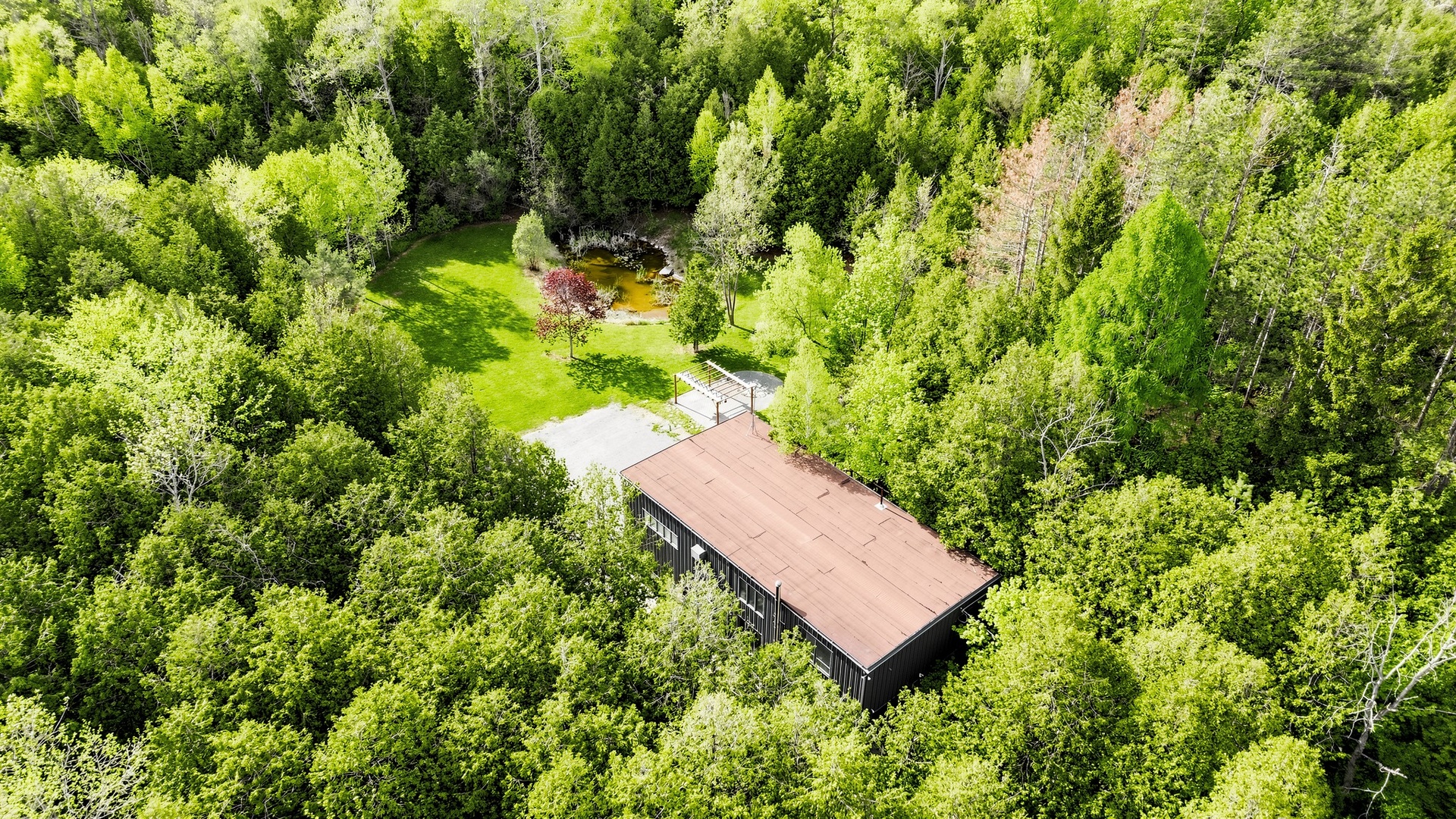
Live where the history runs.
44 Edgewood Road sits on 13.58 acres along the Eramosa in Eden Mills with managed forest, river frontage and a name that carries the village's own past.